How Big Are Acupuncture Needles? (And Why They’re Not as Scary as You Think)
One of the most common things I hear from new patients is:
“I’m curious about acupuncture… but I hate needles.”
If that sounds familiar, you’re definitely not alone. Fear of needles is one of the biggest reasons people hesitate to try acupuncture, even when they’ve heard how helpful it can be.
But here’s the surprising truth:
Acupuncture needles are incredibly tiny. Much smaller than most people imagine.
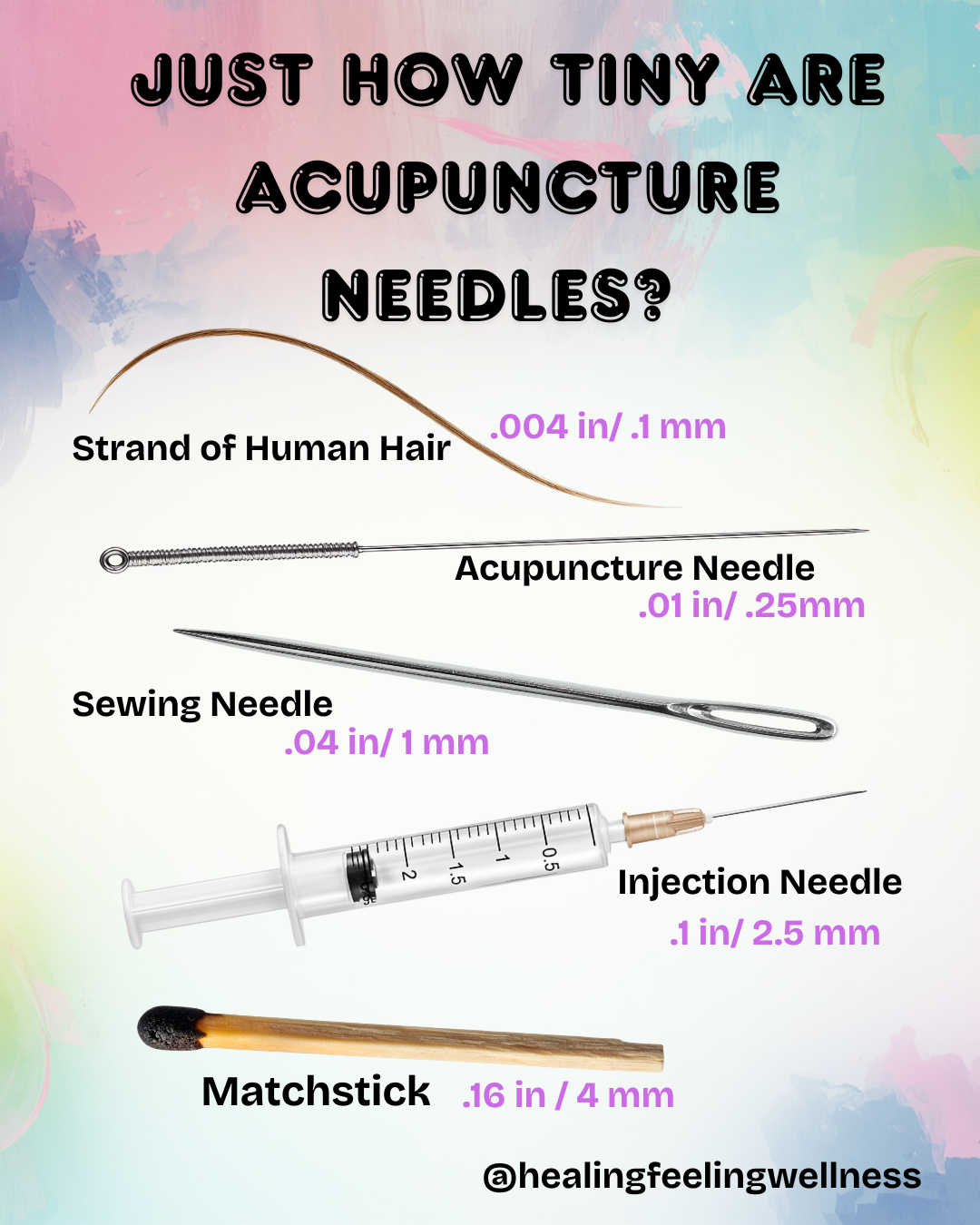
The average diameter of an acupuncture needle is 10 times smaller than an injection needle and only about 2 times larger than a human hair!
Acupuncture Needles vs. Medical Needles
When most people think about needles, they picture the kind used for injections, blood draws, or vaccines. Those needles are hollow and designed to push fluid into the body.
Acupuncture needles are completely different.
They are solid, hair-thin filaments designed to gently stimulate specific points in the body. In fact, acupuncture needles are so small that many of them could fit inside a typical injection needle.
Because they are so thin, they usually create little to no pain when inserted.
Most people describe the sensation as:
a tiny tap
a mild tingling
warmth or heaviness around the point
And many people don’t feel them at all.
What Happens During Treatment?
Once the needles are placed, something interesting happens.
Your nervous system begins to relax.
Your body shifts out of “fight or flight” mode and into rest-and-repair mode. Circulation improves, muscles release tension, and your system begins regulating itself.
This is why many patients experience:
deep relaxation
a sense of calm
or even falling asleep during treatment
Some people joke that acupuncture is the best nap they’ve had all week.
Honestly, I hear that a lot.
The Bottom Line
Yes, acupuncture uses needles.
But they’re far smaller and gentler than most people expect.
For many people, the experience ends up being not only comfortable—but deeply relaxing.
And once they try it, the reaction I hear most often is:
“I wish I had done this sooner.”